
How Many Days Do You Need At Hawai’i Volcanoes National Park?
Off the Eaten Path’s guide to visiting Hawaiʻi Volcanoes National Park answers the question everyone planning a Big Island trip is asking: how many days do you need for Hawaiʻi Volcanoes National Park? With highlights from our visit this guide will help you plan every day of your trip.
My sister lives on Oahu, and over the years we’ve been lucky enough to make the trip out to see her in Hawaii several times. While Oahu is stunning and there are no shortage of things to do, we’ve wanted to take advantage of cheaper island hopping flights when we are visiting her and see what the other Hawaiian Islands had to explore.
If you’re not familiar, island hopping is exactly what it sounds like: after a few days on one island, you catch a short inter-island flight and spend a few days somewhere new. The flights are quick (think 30 to 45 minutes), and it’s one of the best ways to experience how dramatically different each island actually is from the others.
We had already been to Maui on a previous trip, and when it came time to pick our next island, the Big Island won out for a few reasons. The Big Island felt more manageable with kids (at the time of our trip, our kids were three and one), and we loved the idea of knocking another national park off our list (we’ve visited the Smokies, Rocky Mountain National Park, five Utah National Parks, Acadia National Park, Glacier National Park, Bruce Peninsula National Park in Canada, and Mackinac Island as a family).
We’re already planning our next island hop to Kauai when we go visit Katie in a couple weeks, but first — here’s everything you need to know about visiting Hawaiʻi Volcanoes National Park, including the question that probably brought you here: how many days do you actually need?
The answer is two. And here’s how to make the most of them.
planning your visit to hawaii volcanoes national park
Hawaiʻi Volcanoes National Park is one of the most genuinely awe-inspiring places I have ever been, and it is so much bigger and more varied than I anticipated. Rainforests, ancient petroglyphs, lava tubes, sea arches, and yes — actual active lava. It is unlike any other national park in the country.
If you’re planning a trip to the Big Island and trying to figure out how much time to set aside, here’s my honest answer: two days is the sweet spot. One day is doable but you’ll feel rushed and leave wishing you had more time. Three or more days is great if you’re an avid hiker or want to explore Mauna Loa or the park’s quieter Kahuku Unit. For most families, two full days gives you enough time to see the major attractions, do a couple of great hikes, drive crater rim drive and Chain of Craters Road all the way to the coast, and actually slow down enough to take it all in without feeling like you’re sprinting from stop to stop.
GETTING THERE AND WHERE TO STAY
The nearest airport is Hilo International, about 30 miles northeast of the park. You can also fly into Ellison Onizuka Kona International Airport (and many people do because it tends to have more flight options), but if you’re coming from Kona, plan for about two hours each way (either as a day trip or an overnight trip). No matter which airport you fly into, you’ll definitely need a rental car — there is no public transportation or shuttle service within the park.
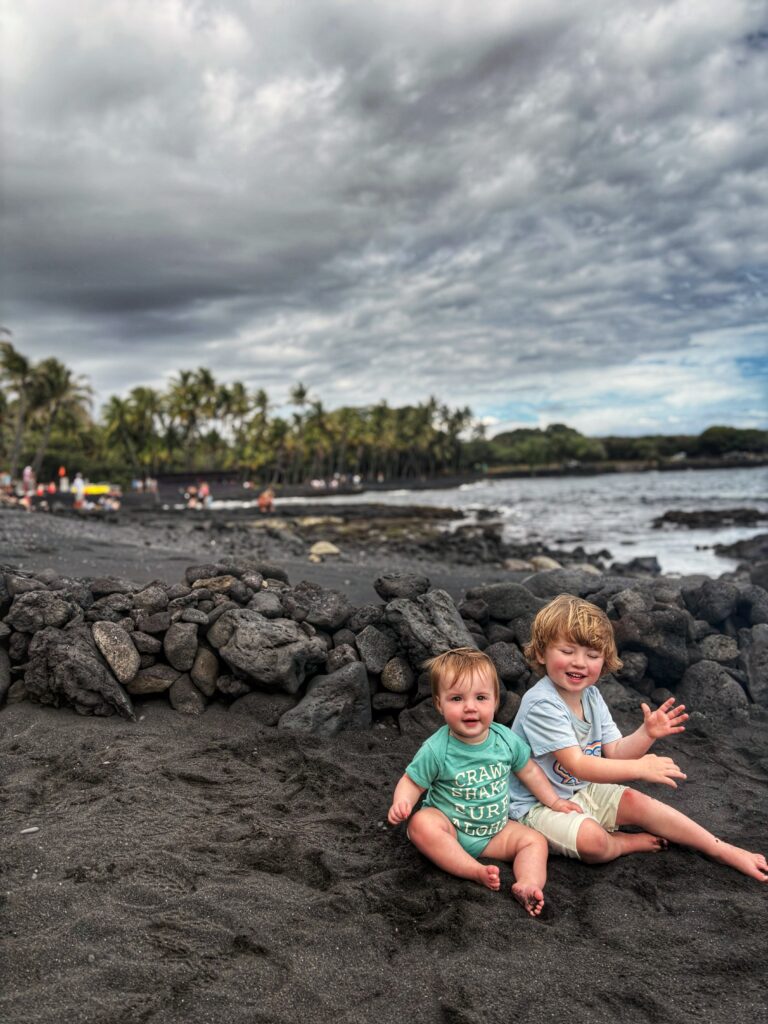
A quick note if you’re visiting the park as a day trip from somewhere else on the island: it’s worth getting an early start no matter where you’re based. The park is open 24 hours a day, and getting there before 9am means more parking, fewer crowds on the trails, and cooler temperatures for hiking. If you’re coming from Kona and doing it as a day trip, I’d honestly recommend combining the park with a stop at Punalu’u Black Sand Beach on your way back — it breaks up the drive and is one of the most unique beaches on the island.
Staying as close to the park as possible is one of the best things you can do for a two-day visit. It means you can be first through the gate in the morning, pop back to your room if you need to regroup mid-day, and catch the glow over the caldera in the evening without rushing.
We were lucky enough to stay at Kīlauea Military Camp (KMC), a Morale, Welfare & Recreation facility right inside the park that is open to active duty military, veterans, and their families because my brother-in-law is active duty Navy. Our cabin had three bedrooms and a fireplace and put us right in the middle of everything, which was perfect — we had no significant drive to any of the major stops. If you or someone in your family has military eligibility, it’s worth looking into.
For everyone else, there are a few options within or right next to the park. Volcano House Hotel is a historic retreat inside the park with 33 guest rooms, cabins, and campsites, and guests literally wake up on the edge of an active volcano.
The standard rooms have rustic details, and the crater view rooms are worth the upgrade if it’s in your budget — there’s nothing quite like looking out at Halemaʻumaʻu with your morning coffee. The Nāmakanipaio Campground, managed by Volcano House, offers rustic one-room wooden cabins that are always in high demand, as well as tent sites. Nāmakanipaio has restrooms, fresh water, picnic tables, and barbecue pits, and the camper cabins each have a picnic table, an outdoor barbecue grill, and an outdoor fire pit, running $15 per night.
If you want to bring your own tent, site rental is $15 per night, or you can rent a tent directly through Volcano House for an additional $40 per night per tent (up to two tents). Call Volcano House directly to reserve — it’s a pretty special way to experience the park.
Just outside the entrance of the park, Volcano Village is about a mile down the road and offers bed and breakfasts, vacation rentals, and small lodges surrounded by rainforest. It’s a great home base and gives you easy access to the park without being inside it.
We ate dinner at the Rim restaurant at Volcano House and would definitely recommend it — the views of Kīlauea Caldera are stunning and if there’s any glow in the crater in the evening, you’ll have a front-row seat. Make a reservation. We packed lunches from the grocery store both days (easy sandwich supplies and snacks), which made it easy to eat on the trail and keep moving, but Volcano Village has a handful of great options a mile from the park entrance.
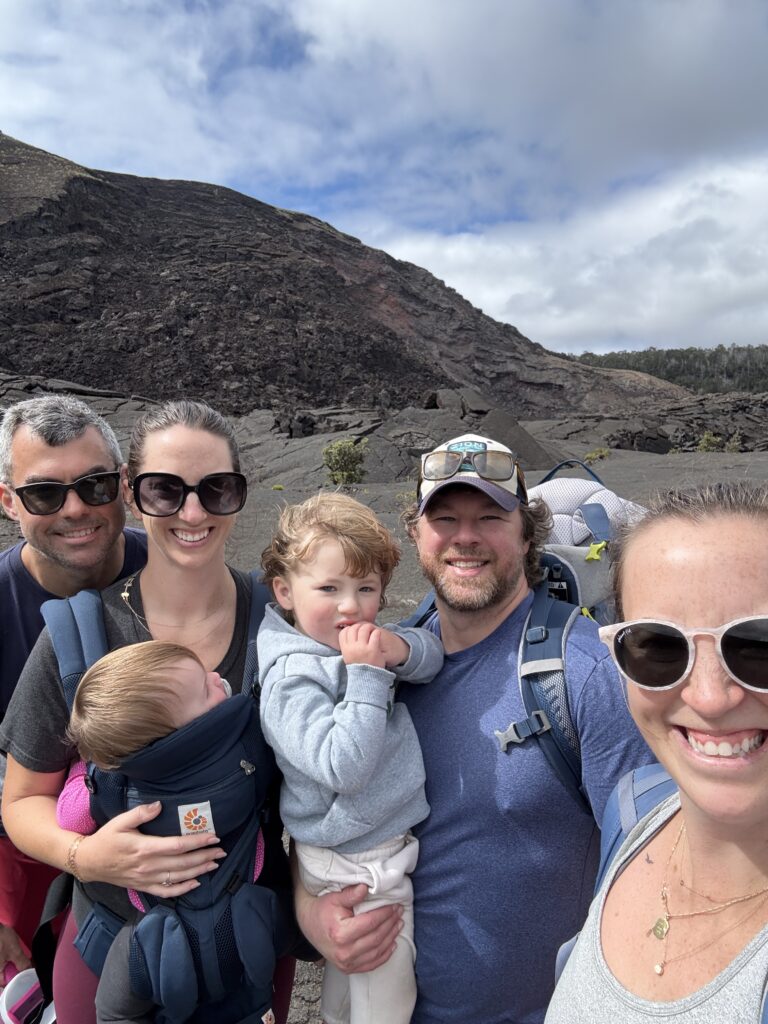
ENTRANCE FEES
The park is open 24 hours a day, 7 days a week, while the Kilauea Visitor Center is open 9am to 5pm. The entrance fee is $30 per private vehicle (valid for seven days, covering up to 15 passengers). For those entering on foot or bicycle, the fee is $15 per person, and for motorcycles it’s $25. Children 15 and under are free.
If you’re visiting multiple national parks during your trip or during the year, the America the Beautiful Pass is $80 and covers all US national parks and federal lands — well worth it if you’re hitting more than two or three parks. There’s also a Hawaiʻi Tri-Park Annual Pass for $55, which covers Hawaiʻi Volcanoes, Haleakalā National Park on Maui, and Puʻuhonua o Hōnaunau National Historical Park.
One thing to be aware of for your visit: the Kilauea Visitor’s Center closed for a two-year renovation beginning February 2025, and in the meantime, Kīlauea Military Camp’s Koa Room is serving as a welcome center and gift shop for park visitors and tourists, located 1.2 miles west of the original visitor center with parking on the ball field. Always check the park’s website before you go for the latest on closures and conditions — volcanic activity can also change trail access with very little notice.
WHAT TO DO
There is a lot of ground to cover in this park — it spans over 500 square miles — so here’s how I’d break it down across two days.
Day One: The Summit Area
Start your first day in the summit area around Kīlauea Caldera. This is where you’ll find most of the park’s most iconic stops and it’s easy to spend a full day here without even touching Chain of Craters Road.
The Steam Vents are right near the entrance and visitor center and make for a great first stop — clouds of steam rise from cracks in the ground and it sets the tone for the whole day. From there, walk the Sulphur Banks trail (Ha’akulamanu), an easy 1.2-mile round trip that takes you past steaming cracks and colorful mineral deposits. Fair warning: it smells unmistakably like rotten eggs out there and your kids will absolutely think this is hilarious.
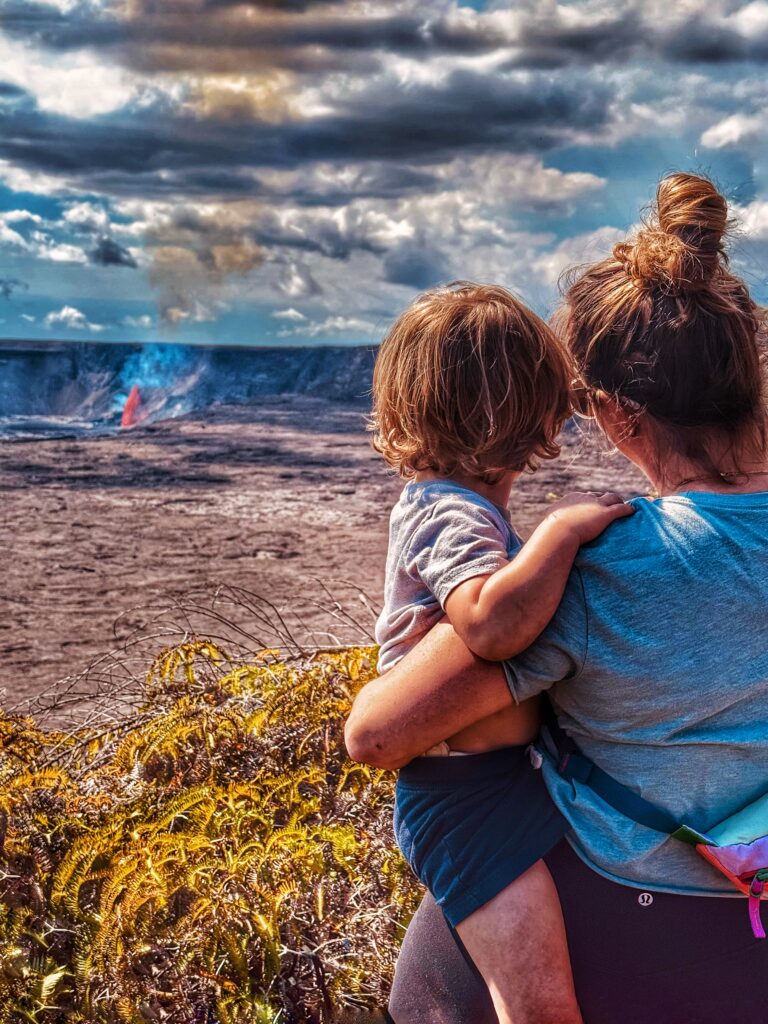
The Halema’uma’u Crater overlook is a must. Halema’uma’u is said to be the home of Pele, the volcano goddess and standing at the rim of the caldera and looking down into it is genuinely one of the most surreal things I’ve ever done. If Kīlauea is actively erupting during your visit, check current conditions because viewing active lava from this area can be spectacular, especially at dusk (more about Pele and active eruptions below!)
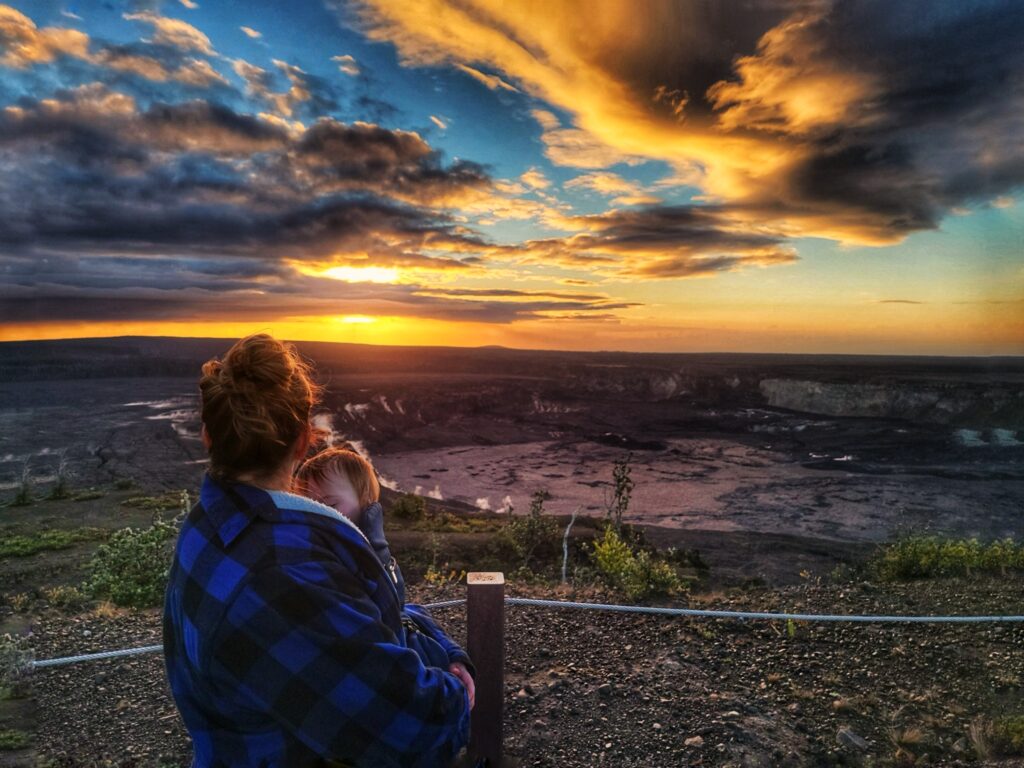
We enjoyed watching the steam and the glow emerging from the crater at sunrise and again in the evening over cocktails — both were spectacular.
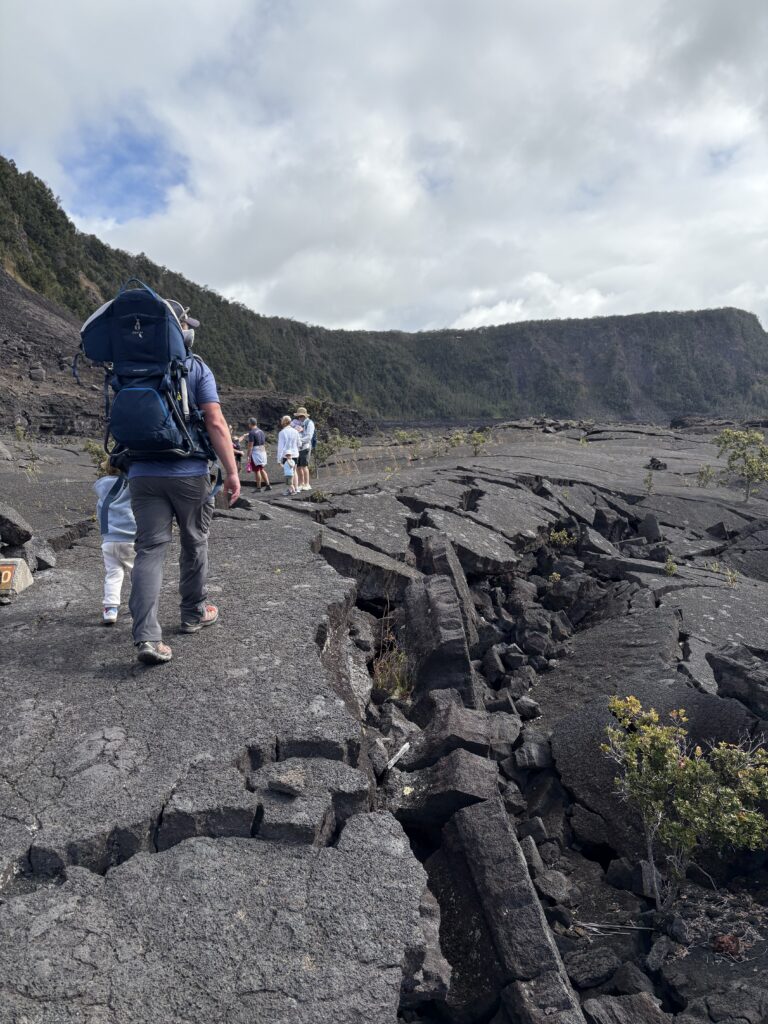
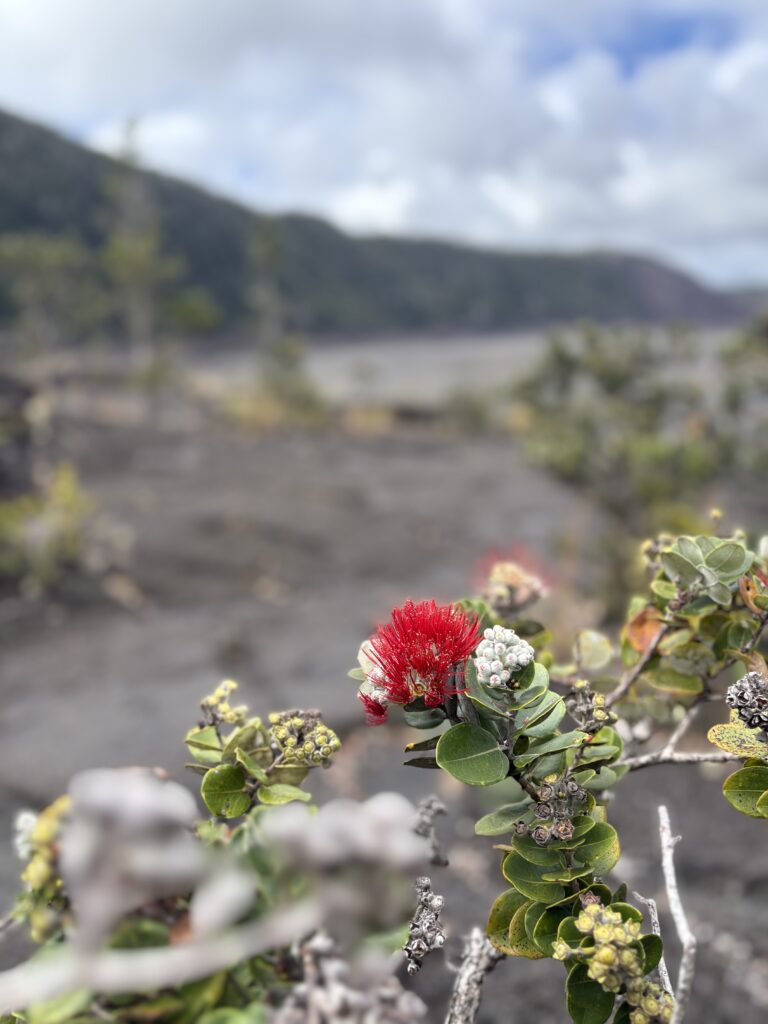
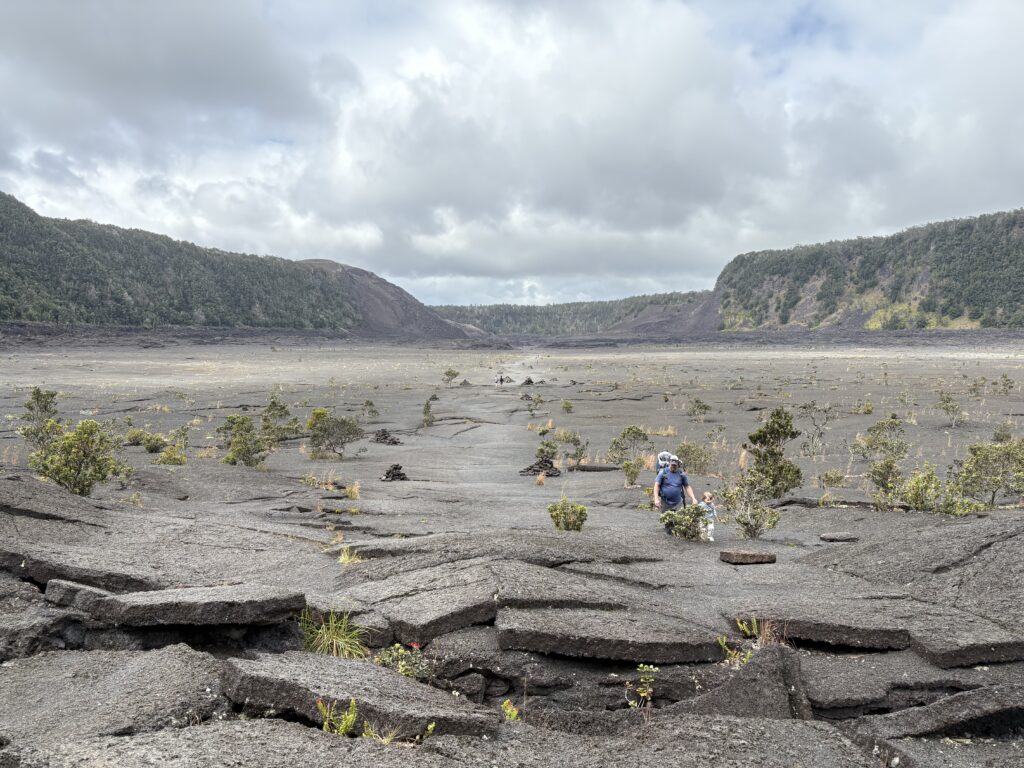
The Kīlauea Iki Trail is my top hike recommendation for this park. It’s a 4-mile round trip that starts in a forest of native ʻōhiʻa trees and Hawaiian tree ferns and ends with a walk across an crater floor. The contrast is incredible — you go from lush, green rainforest to a barren, hardened lava lake within the same hike, and it feels like hiking through two completely different worlds. The trailhead is at an overlook of the crater formed from a 1959 eruption marked by lava fountains more than half a mile long and a plume that reached a world-record 1,900 feet high.
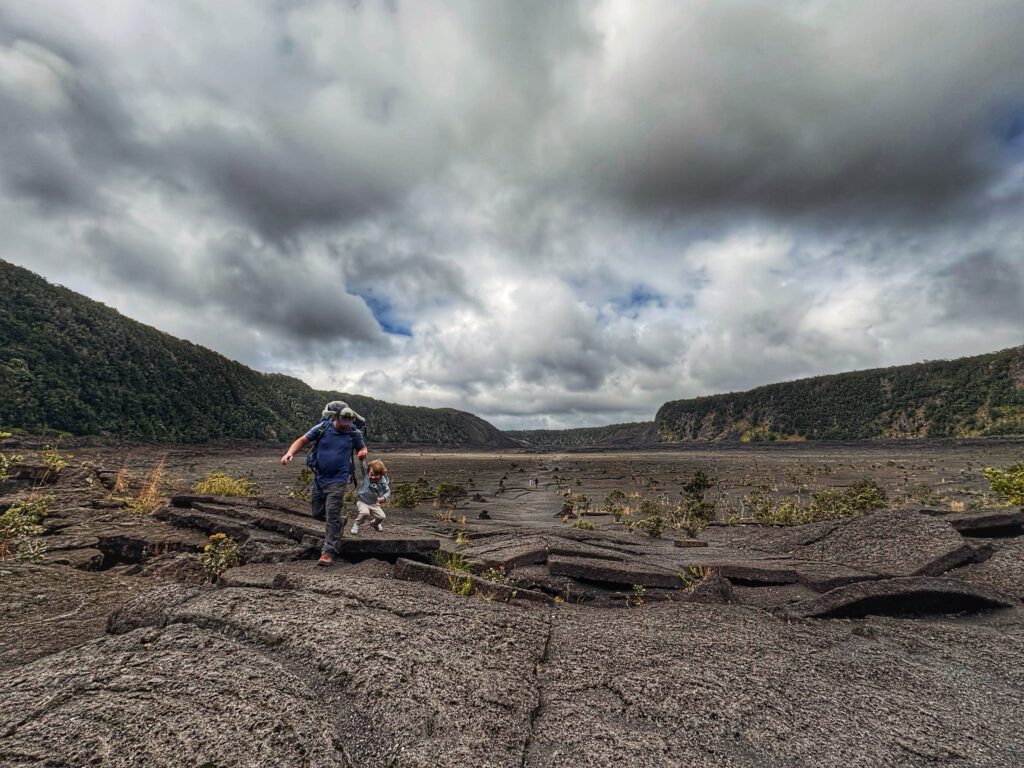
This hiking trail manageable enough for families with both younger and older kids (we carried out 3 and 1 year olds in a hiking backpack and baby bjorn carrier, but our oldest walked some of the way) and the payoff at the crater floor is absolutely worth it.
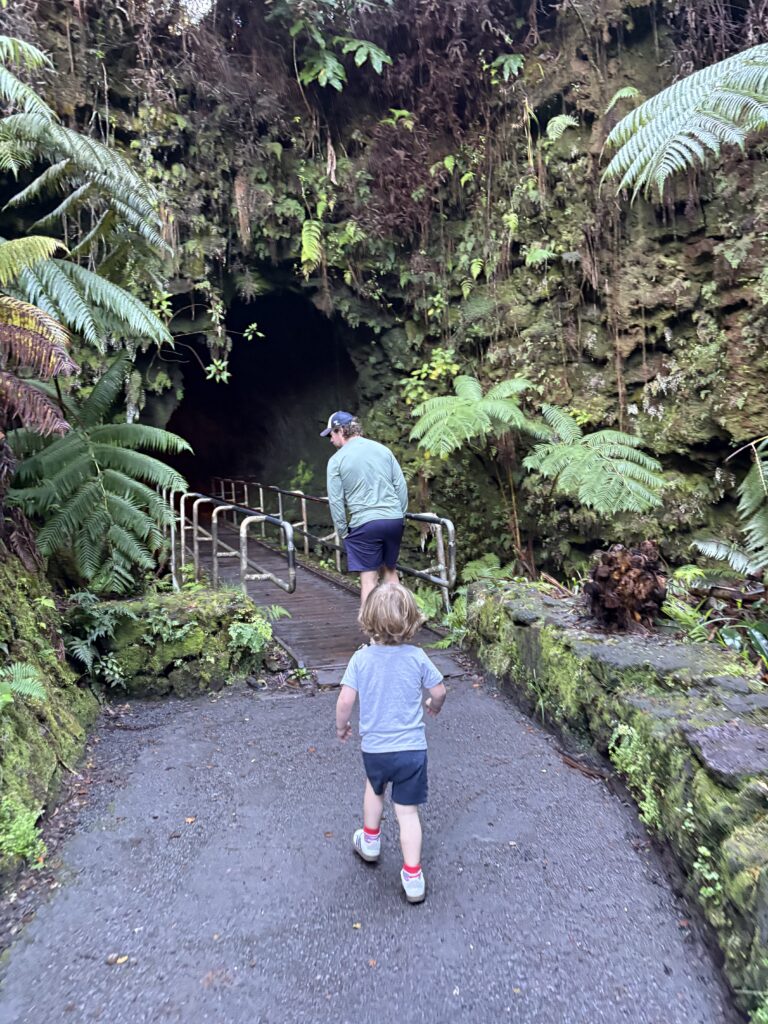
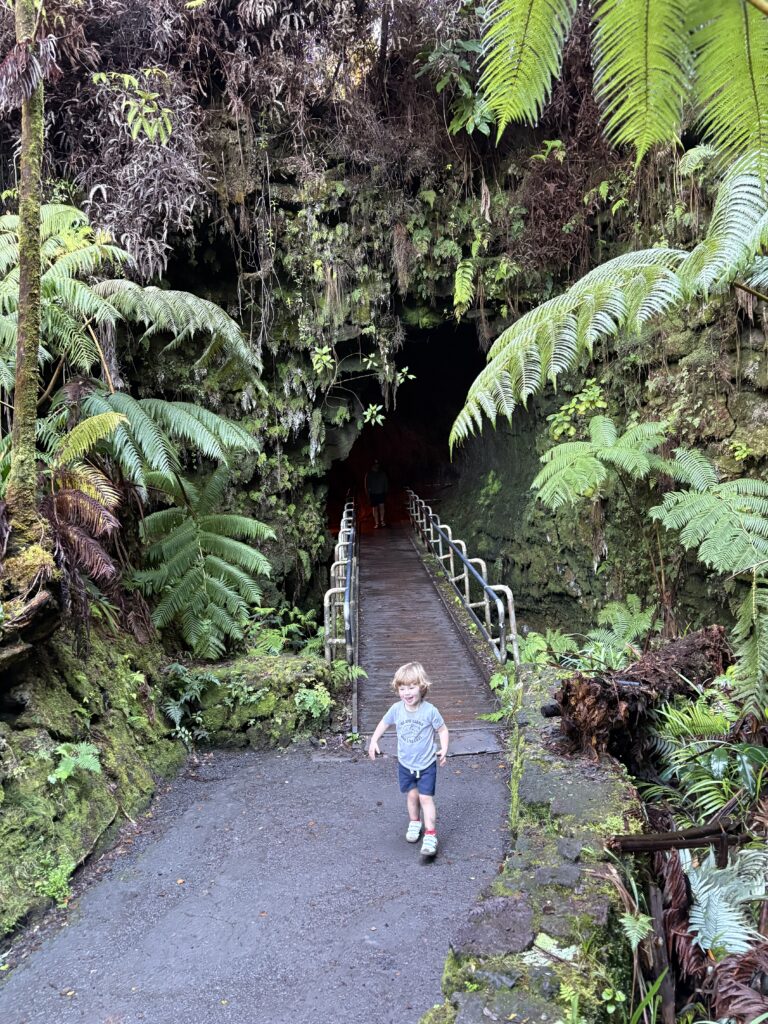
After Kīlauea Iki, make time for the Nahuku Lava Tube (also called Thurston Lava Tube).
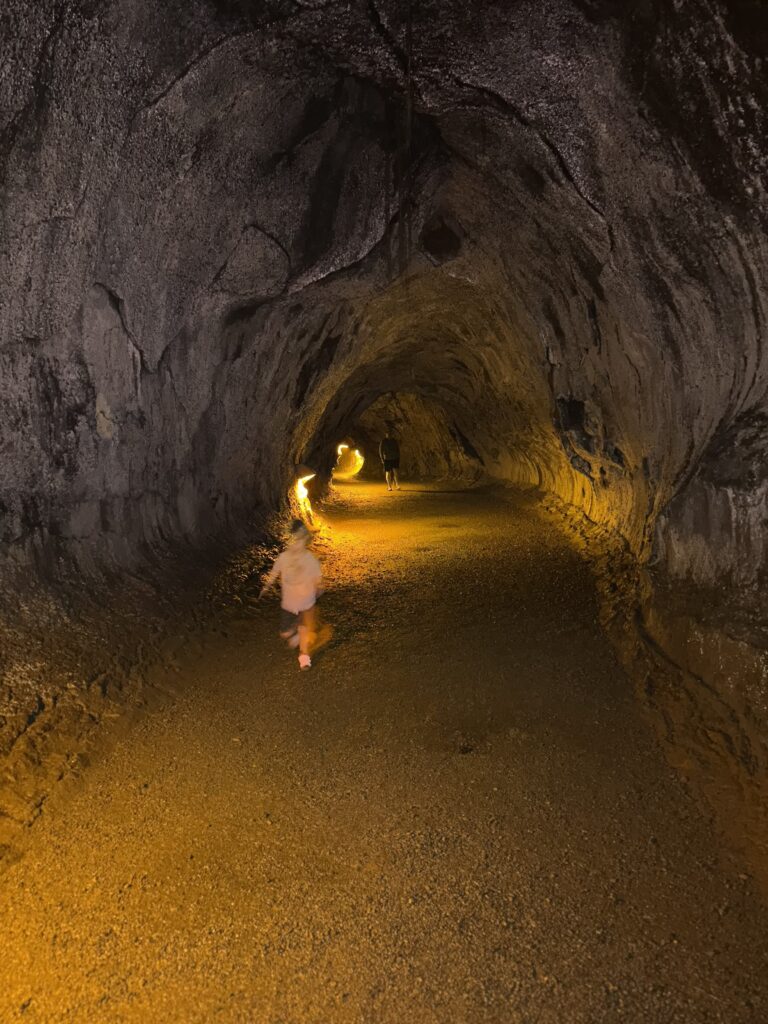
A 20-minute walk through a tree fern forest takes you through a lava tube that is illuminated during daytime hours. Our kids loved this one and its an easy trail. The parking lot fills up fast, so try to go early in the morning or after 4pm, or park at the Kīlauea Iki Lookout which is a short walk over.
End your first day at Devastation Trail — a short, easy half-mile walk that is stroller and wheelchair accessible and shows you an area blanketed in volcanic cinders from the 1959 eruption. Life is slowly reclaiming the landscape and the visual is striking. Don’t forget to ask about the Junior Ranger program — our kids earned their badges during our visit and it was a great way to keep them engaged throughout the day.
Day Two: Chain of Craters Road
Dedicate your second day entirely to Chain of Craters Road and the lower elevations of the park. This 18-mile road descends nearly 4,000 feet from the summit to the coast and is one of the most dramatic scenic drives I’ve ever done. You’ll pass a string of massive pit craters along the way and the views get more and more jaw-dropping the further down you go.
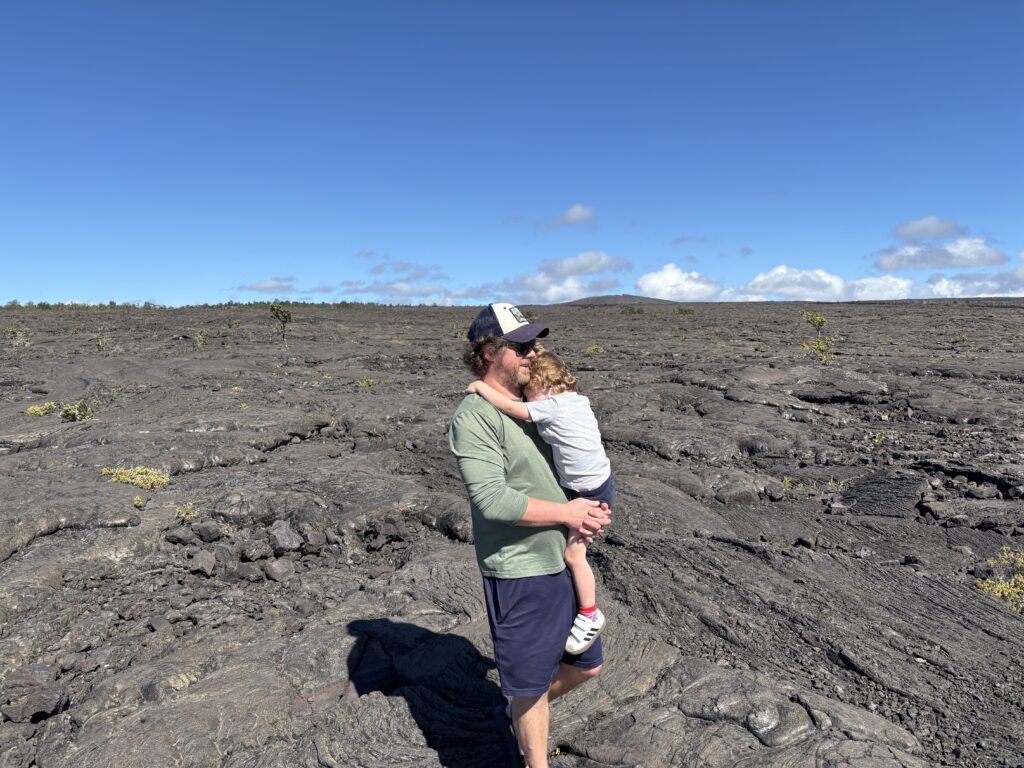
Stop at the Puʻuloa Petroglyphs trail about two-thirds of the way down. It’s an easy out-and-back trail off the lower elevations of Chain of Craters Road that leads across a barren lava flow to a short boardwalk where visitors can see ancient Hawaiian petroglyphs carved into the lava rock. The archaeological site boasts more than 23,000 petroglyphs — the largest collection in Hawaiʻi — with motifs of circles, canoe sails, human forms, and other geometric shapes.
It takes about 20 minutes and is absolutely worth the stop. Please be respectful — this is a sacred site.
At the very end of the road you’ll find the Hōlei Sea Arch. It’s a 90-foot-tall rock formation cut into the cliff of an ancient lava flow about 550 years ago, with a viewing area set back from the cliff edge.
Standing there watching the Pacific crash against ancient black lava rock is something else entirely. We also got the treat of seeing Bring a picnic lunch, take your time, and enjoy it.
THE CULTURAL SIGNIFICANCE OF ERUPTIONS
Before you visit, it’s worth taking a moment to understand what volcanic eruptions mean in Hawaiian culture because it will change the way you experience the park.
According to tradition, Pele is embodied by the lava and natural forces associated with volcanic eruptions. Ancient Hawaiian chants describe her kuleana — her function — as creating new land while also destroying what was once there. She is both destructive and creative in nature.
Hawaiians don’t see eruptions as disasters but as Pele’s way of renewing the land. When lava flows and new land forms, it is understood as Pele at work — shaping, creating, beginning again.
For many Hawaiians, Pele is considered ʻohana — family — and is revered. The presence of Pelehonuamea is not necessarily approached with fear, but with respect. In Hawaiian tradition, it is customary to ask permission from Pele to travel through her land and this sacred landscape.
We felt this profoundly during our visit. Kīlauea had been actively erupting in the weeks before our trip, then went quiet the week before we arrived. We spent two full days hiking into the crater, walking through the lava tube, earning junior ranger badges, and watching steam and glow rise from Kīlauea at sunrise and at sunset — and it was all extraordinary even without an active eruption. Then, on the morning we were supposed to leave for other stops on the Big Island before catching our evening flight back to Oahu, we pulled into the visitor center to use the restroom before hitting the road. And we heard from some other tourists that Kilauea was erupting and lava was visible from the north vent in the crater.
We changed our plans on the spot and watched for several hours. I genuinely don’t have the right words for it. It was beautiful and powerful and humbling in a way that’s hard to describe, knowing what you now know about what that eruption means to the people and culture of this place. As our three-year-old put it when we finally got back in the car: “pretty neat.” Pretty neat indeed.
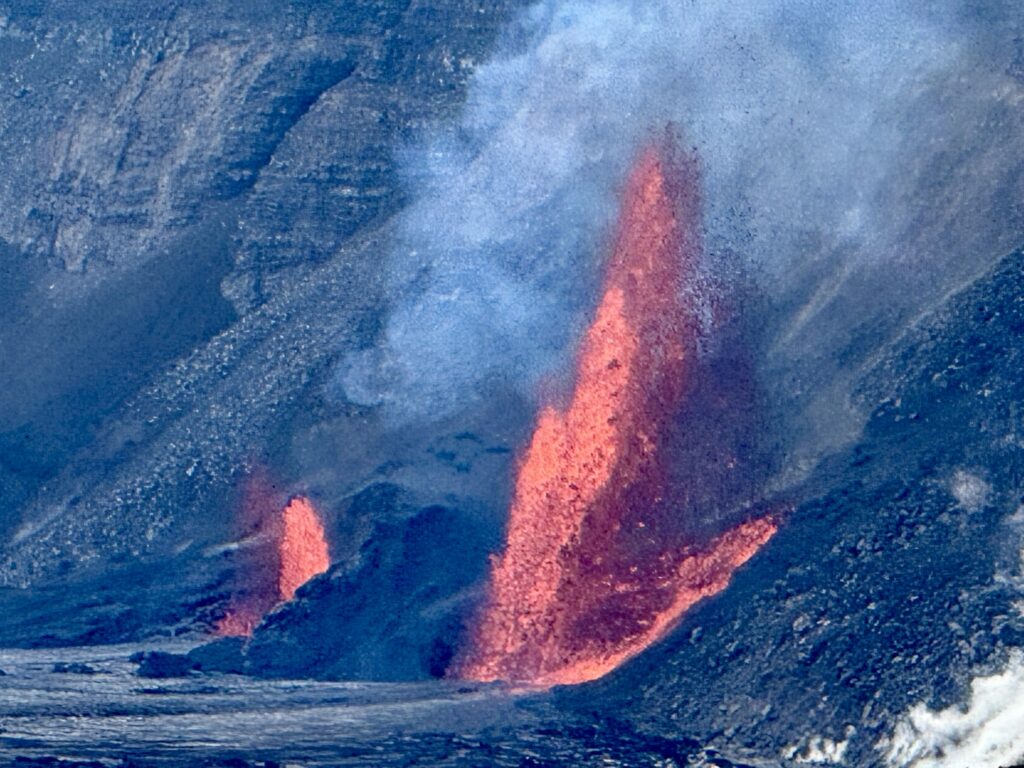
Lava activity is never guaranteed, so always check the USGS Hawaiian Volcano Observatory for real-time updates before you go. But whether Kīlauea is erupting or not, the park is extraordinary. The eruption was a privilege we didn’t expect and didn’t take for granted. If Kīlauea is erupting while you’re visiting, ask at the welcome center where the best current viewing spots are.
GREAT HIKES IN HAWAIʻI VOLCANOES NATIONAL PARK
Kilauea Iki Crater Trail, 4 miles round trip
Nāhuku (Thurston Lava Tube) Loop, 1.3 miles
Ha’akulamanu (Sulphur Banks) Trail, 1.2 miles
Devastation Trail, 0.5 miles (wheelchair and stroller accessible)
Puʻuloa Petroglyphs Trail, 1.4 miles round trip
Crater Rim Trail, varies
Kaʻū Desert / Footprints Trail, 3.6 miles
Mauna Loa Summit Trail (multi-day backcountry)
TIPS FOR MAXIMIZING YOUR EXPERIENCE WITHIN YOUR AVAILABLE DAYS
Get there early. Parking fills up fast at popular stops like the Nāhuku Lava Tube and Kīlauea Iki trailhead. Being in the park by 8am means you’ll have the trails largely to yourself and can hit the busiest spots before the crowds arrive.
Check conditions before every day. Volcanic activity can change trail access, close overlooks, or — happily — surprise you with an eruption. Stop at the welcome center first thing each morning, follow the park’s alerts online, and check the USGS Hawaiian Volcano Observatory website for the latest on Kīlauea’s activity.
Do Chain of Craters Road on its own day. It deserves it. If you try to squeeze it in with the summit area you’ll feel rushed at both. Give the scenic drive a full day and take your time at every stop on the way down.
Pack for two climates. Volcano Village and the summit area sit at about 4,000 feet elevation and can be cool, misty, and even rainy — noticeably different from the rest of the Big Island. Even in summer, evenings are chilly and mornings can be foggy. The lower elevations of Chain of Craters Road are drier and sunnier. Pack layers, sunscreen, and good walking shoes.
Bring lunch. There’s no food at the lower end of Chain of Craters Road and it’s a long drive down and back. Pack a cooler with lunch and snacks for day two so you can eat at the Holei Sea Arch without having to rush back.
Stay on marked trails. Lava rock can be as sharp as broken glass, and the ground near steam vents and cliff edges can be unstable.
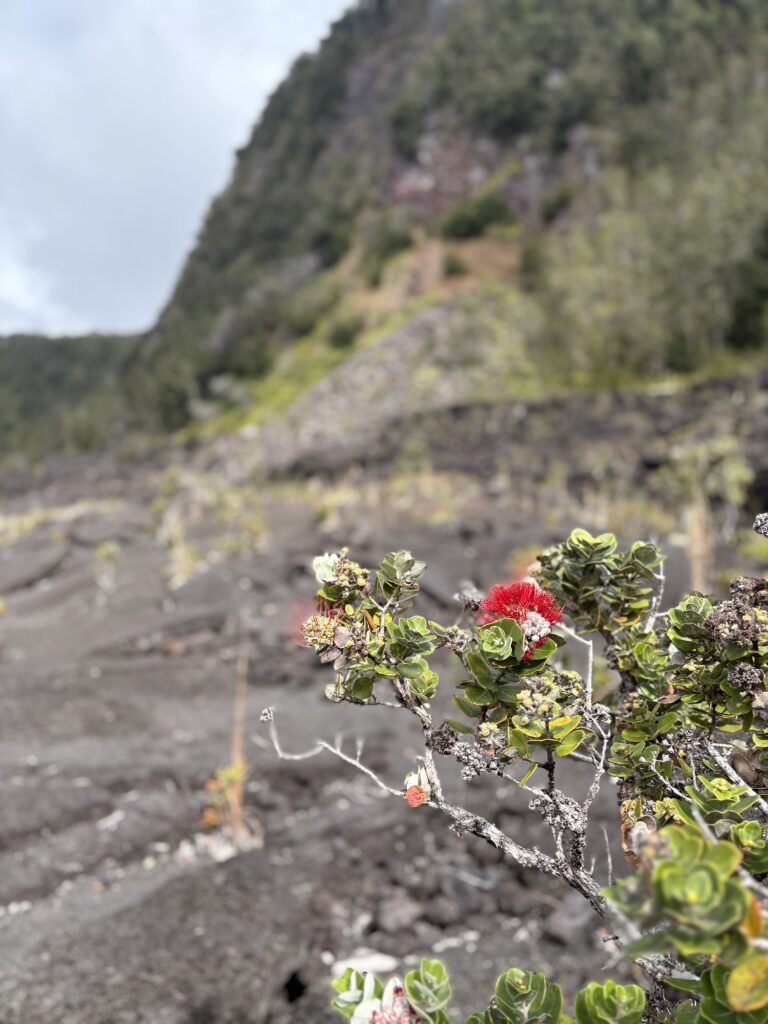
Do not take lava rocks. This cannot be said enough. I know it seems like a souvenir but it is considered deeply culturally disrespectful and is also genuinely believed to bring bad luck. It is culturally disrespectful to the people for whom this land is sacred, and the “Pele’s curse” reputation is real — packages of lava rocks are mailed back to Hawaiʻi from around the world every year, often with letters of apology.
HOW MANY DAYS DO YOU NEED FOR HAWAIʻI VOLCANOES NATIONAL PARK?
Two days. That’s my answer. One day if you truly have no other option, but go in with realistic expectations that you’ll be choosing highlights and moving quickly. Two days lets you breathe, do the hikes that are worth doing, drive Chain of Craters Road all the way to the ocean, and maybe even catch an evening eruption glow over the caldera If you love hiking and geology or want to explore Mauna Loa or the Kahuku Unit (a separate, quieter section of the park about an hour away), add a third day and you won’t regret it.
Either way, this park will surprise you. I promise.